Pixel Art (1978–present)
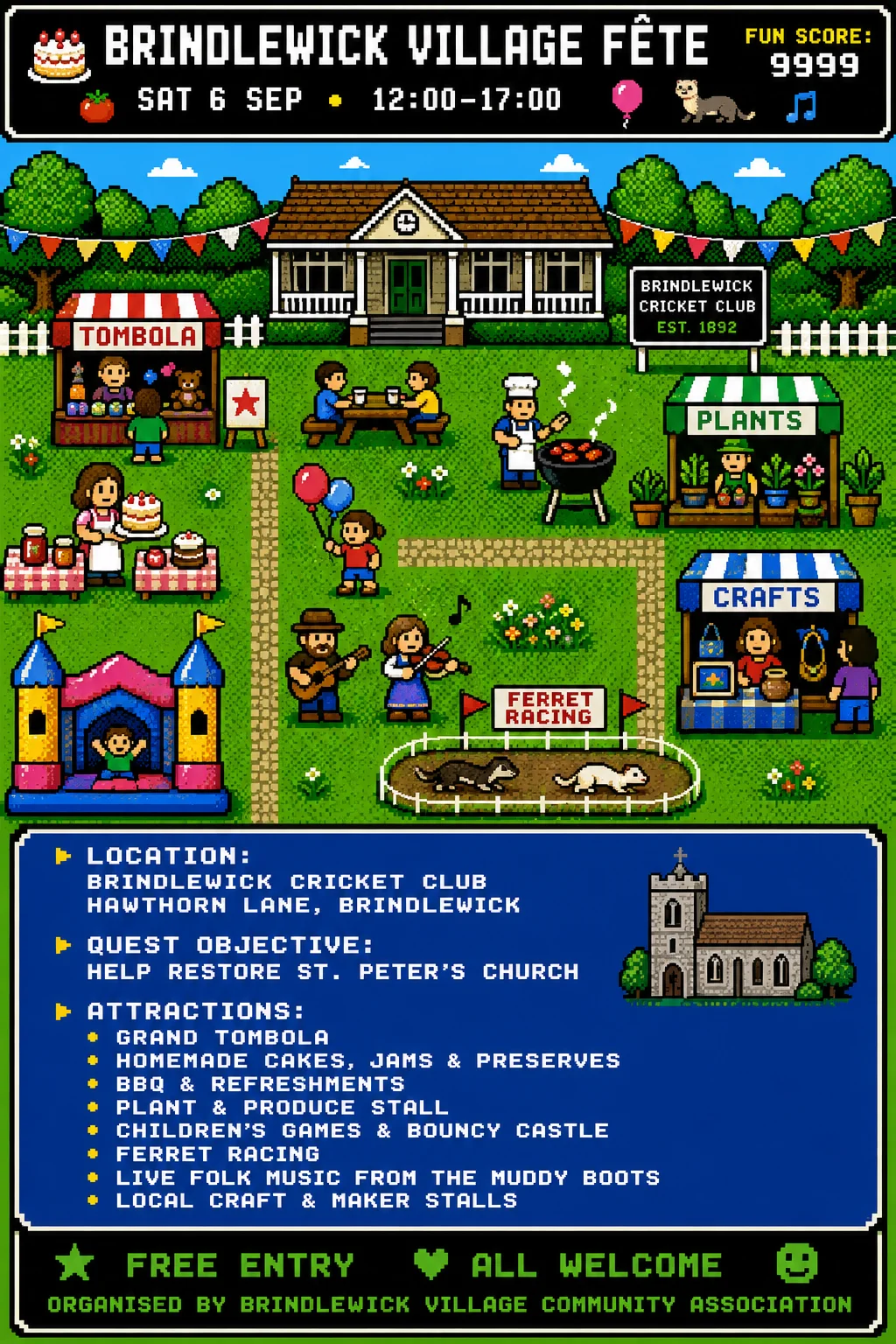
The aesthetic of early arcade and home computer graphics, where hardware limits forced artists to work within grids of large visible square pixels and palettes of 4, 16, or 256 colours. Specific hardware palettes are part of the vocabulary: the four-colour CGA palette (cyan, magenta, white, black), the ZX Spectrum's eight pure colours with bright variants, the NES palette of 54 colours, the Game Boy's four shades of green. Dithering — alternating pixels of two colours in a checkerboard — creates the illusion of a third tone. Characters are defined by tiny sprite grids of 16×16 or 32×32 pixels; backgrounds are tile-based. Everything has a chunky, deliberate, hand-placed quality.
Specify the hardware palette by name (CGA, Spectrum, Game Boy) for a specific look; without this the AI will produce a generic pixel aesthetic
Fête poster
Gig poster